Flat Clearance Queens Park: Recycling and Sustainability Commitment
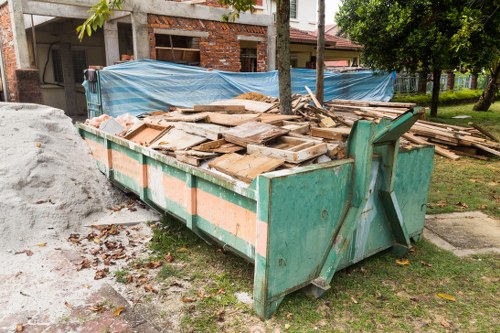
At Flat Clearance Queens Park we place sustainability at the heart of every clearance. Our approach to eco-friendly waste disposal area management and a sustainable rubbish area philosophy ensures materials are diverted from landfill where possible, reused when suitable, and responsibly recycled. We work across the Queens Park community and surrounding boroughs to align with local strategies and to deliver transparent, measurable environmental outcomes.We have set an ambitious recycling percentage target to drive performance: a minimum of 70% diversion of recoverable materials from landfill within three years and ongoing improvements thereafter. This target applies to furniture, textiles, metal, wood, paper/cardboard and selected household appliances. Our progress is tracked quarterly and shared with partners so that our Queens Park flat clearance activity contributes to a wider circular economy in the area.
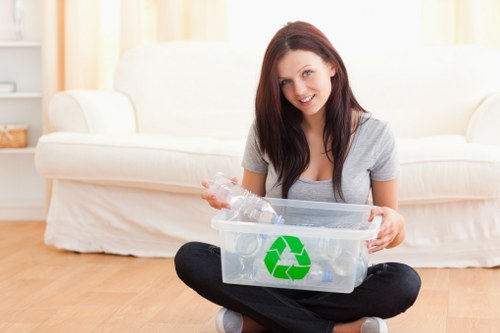 Our sustainable clearance model uses defined sorting points during collections and on-site processing to separate reusable items from recyclable fractions. We prioritise donation and reuse before recycling, and only non-recoverable residues are considered for energy recovery or safe disposal. By integrating reuse pathways and careful sorting, our flat removal and rubbish clearance in Queens Park maintain high resource recovery rates while keeping contamination low.
Local transfer stations and processing partners
We coordinate with local transfer stations and municipal facilities to accelerate responsible processing. Nearby resources include borough recycling centres such as Willesden Household Waste Recycling Centre and Westminster transfer facilities that accept segregated loads from commercial clearance services. These sites funnel materials to Materials Recovery Facilities (MRFs), authorised reuse hubs, and specialist processing streams for items like WEEE (electricals) and bulky waste.
Partnerships with charities and reuse networks
We maintain active partnerships with charities, social enterprises and local reuse organisations to keep usable items in circulation. Typical collaborations include local thrift charities and national partners that collect:- Furniture and soft furnishings ready for refurbishment
- Clothing and textiles suitable for donation
- Working electrical appliances channelled to accredited WEEE collectors
- Books and household goods redistributed through community networks
These partnerships are essential to our Queens Park clearances — not only reducing landfill but also supporting community benefit through reuse and redistribution.
As part of our agreements we ensure items donated to charities meet safety and hygiene standards and are accompanied by clear documentation, reducing returns and improving the life span of products that could otherwise be discarded.
Low-carbon vans and transport strategyOur fleet strategy focuses on minimising emissions from collections and drop-offs. We operate low-carbon vans, including electric vehicles and Euro-6 efficient diesel units for longer routes, and employ route optimisation software to cut mileage. In denser parts of Queens Park we also deploy cargo bikes for small item transfers, reducing congestion and tailpipe emissions. These measures are designed to lower the carbon footprint of our flat clearance services without compromising reliability.
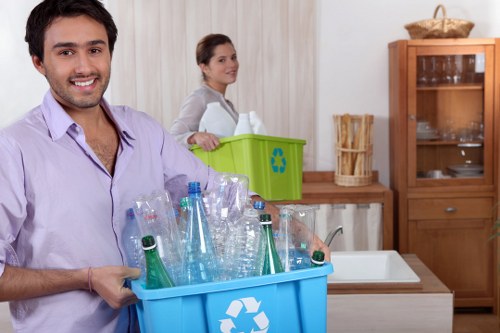 The boroughs that overlap Queens Park have progressive approaches to waste separation which we adopt in our operations. Residents are encouraged to separate recyclables into blue or mixed recycling, organic waste into food/bio bins, and residual waste into designated containers — practices we mirror during clearances. Our crews are trained in local separation rules so that materials are sorted at source and contamination rates are reduced, ensuring higher recycling yields once materials reach transfer stations and MRFs.
We also provide clear item-level segregation during clearances: glass, paper/cardboard, metals, and plastics follow local streams, while hazardous items such as batteries and solvents are identified and routed to specialist disposal channels in accordance with borough regulations. Compliance with local waste policies is central to how we operate across the Queens Park area.
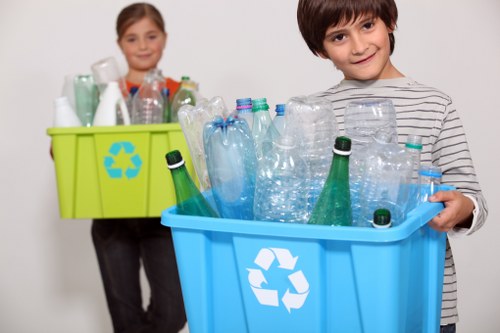
Creating a sustainable rubbish area and circular outcomes
A sustainable rubbish area concept means designing the collection and processing flow so that waste becomes a resource. For flat clearances we separate salvageable furniture for refurbishment, identify components for salvage (e.g., timber, metal fixings), and send recyclable packaging and materials to the correct MRFs. We also support upcycling and local repair initiatives, helping keep materials in use for longer and reducing demand for virgin resources.To measure outcomes we maintain key performance indicators beyond the headline recycling percentage target. These include rates for charity donations, tonnes diverted to MRFs versus landfill, percentage of collections completed by low-emission vehicles, and reduction in overall client-facing carbon footprints. Our aim is a consistent year-on-year improvement backed by audits and partnership reviews.
Queens Park flat clearance services are designed to be practical, local and environmentally responsible. By combining targeted recycling goals, collaboration with transfer stations and charities, low-carbon transport and adherence to borough waste separation systems, we deliver a sustainable clearing solution that protects local streets and supports a circular economy. Together, these strategies create an efficient, accountable, and greener approach to clearance and rubbish removal across Queens Park.